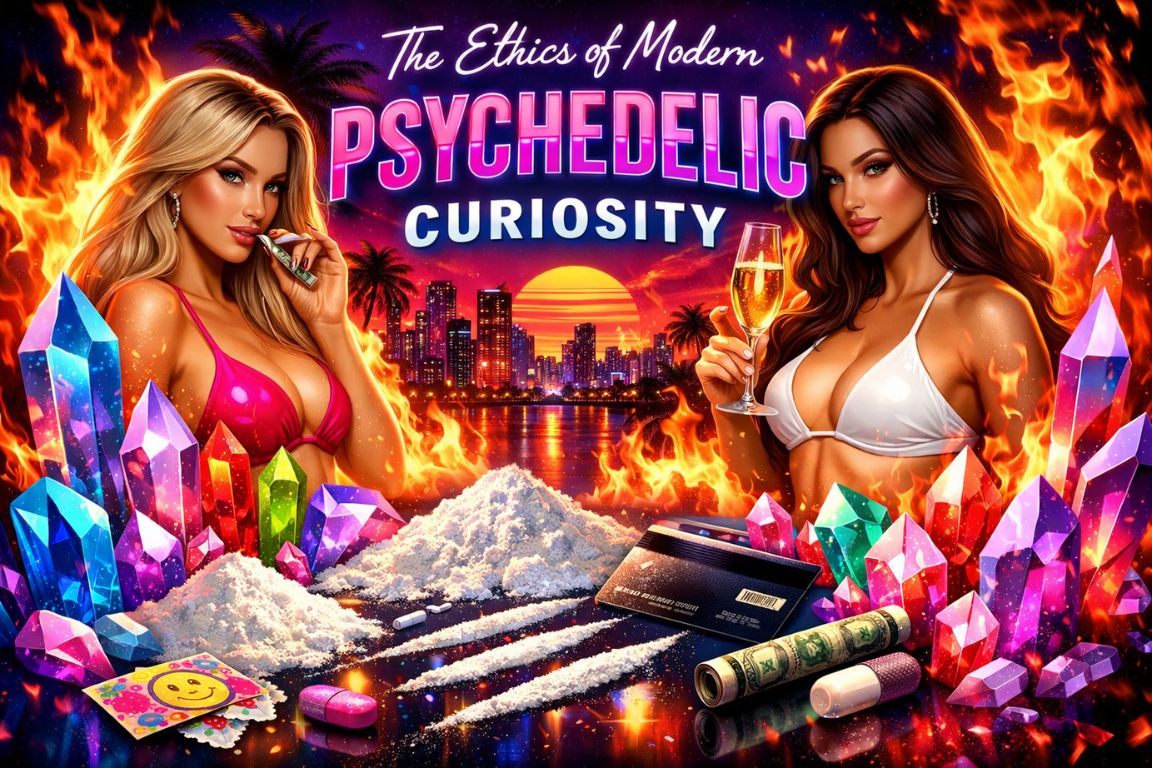
The Ethics of Modern Psychedelic Curiosity
Psychedelics are back in the conversation—but curiosity alone isn’t neutral. As interest grows, so does a harder question: how do we explore altered states responsibly in a modern world?
This isn’t about rules. It’s about awareness.
Curiosity Can Slide Into Consumption
Modern culture is great at turning curiosity into content, trends, and aesthetics. Psychedelics risk becoming just another thing to try, post, or package.
Ethically, curiosity asks:
- Why am I drawn to this?
- Am I seeking understanding—or escape?
There’s a difference between exploration and extraction.
Respect the Weight of the Experience
Altered states aren’t toys. They can be subtle or overwhelming, clarifying or destabilizing. Treating them casually ignores the fact that they interact directly with identity, emotion, and meaning.
Ethical curiosity respects psychological impact, not just novelty.
Context Matters More Than Hype
Stripped of context, psychedelic curiosity becomes shallow. Historically, altered states were framed with intention, boundaries, and integration—even when science didn’t exist.
Modern ethics means rebuilding context:
- Preparation instead of impulse
- Reflection instead of flexing
- Integration instead of chasing the next peak
No One Experience Is Universal
One of the biggest ethical failures is assuming your experience applies to everyone else.
Brains differ. Minds differ. Lives differ.
Ethical curiosity stays humble—and resists turning personal insight into universal truth.
Bottom Line
Modern psychedelic curiosity isn’t unethical—but unexamined curiosity is.
The real question isn’t “What can this show me?”
It’s “How do I engage without flattening, exploiting, or trivializing the experience?”
Awareness before appetite.
Intention before trend.
That’s where ethics start.
Canada Wide Shipping
Enjoy 10% off using promocode HELLYABLOG10