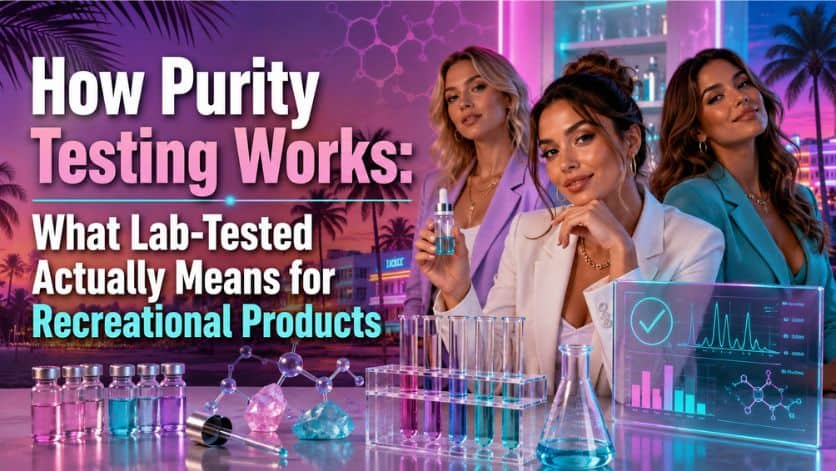
How Purity Testing Works: What Lab-Tested Actually Means for Recreational Products
It’s a term you see more and more these days, especially if you’re exploring the world of recreational products: “lab-tested.” It’s stamped on packaging and touted on websites, a seal of approval meant to inspire confidence. But what does it actually mean? Is it just marketing fluff, or is there real science backing it up? As someone who’s spent a good deal of time around chemistry, I can tell you it’s one of the most important developments in consumer safety we’ve seen in a long time. It’s about moving from a world of uncertainty to one of clarity.
Let’s be honest, the black market has never been known for its quality control. For decades, you just had to trust your source, and more often than not, that trust was misplaced. What was sold as one thing could be another entirely, or worse, cut with dangerous adulterants. The rise of accessible lab testing is changing that dynamic, putting power back into the hands of the consumer. It’s about knowing what you’re getting, and at Hell Ya, we believe that’s not a luxury—it’s a right. So, let’s pull back the curtain and look at how this whole purity testing thing actually works.
The Two Tiers of Truth: Reagent vs. Lab Analysis
When we talk about testing, it’s not a one-size-fits-all process. Think of it in two main levels. The first is reagent testing, which is a bit like a home pregnancy test—it’s a quick, simple way to get a basic “yes” or “no” answer. The second, and far more definitive, level is Gas Chromatography/Mass Spectrometry (GC/MS) analysis. This is the gold standard, the kind of rigorous, detailed analysis that happens in a proper laboratory. It doesn’t just tell you if a substance is present; it tells you how much is there and what else is along for the ride.
Reagent Testing: A First Line of Defense
You might have seen reagent test kits online. They’re small bottles of chemicals that change color when they react with specific substances. For example, the Marquis reagent will turn a dark purple to black in the presence of MDMA. It’s a fantastic tool for harm reduction, allowing you to quickly check if a product at least contains the expected substance. If you’re testing something sold as MDMA and the reagent doesn’t change to the expected color, that’s a massive red flag. You know immediately that it’s not what it’s supposed to be.
However, reagent tests have their limits. They’re what we call “presumptive tests.” They can tell you what’s likely there, but they can’t tell you about purity or the presence of multiple substances. A sample could contain MDMA, but it could also be mixed with caffeine, fentanyl, or something else entirely, and the reagent test might not pick that up. It’s a valuable first step, but it’s not the full story. For that, we need to go to the lab.
GC/MS Analysis: The Gold Standard of Purity
This is where things get serious. Gas Chromatography/Mass Spectrometry is a powerful analytical method used in forensic labs and pharmaceutical companies around the world. It’s how we get the nitty-gritty details about what’s in a product. Here’s a simplified breakdown of how it works:
- Gas Chromatography (GC): First, a tiny, precisely measured sample is vaporized into a gas. This gas is then pushed through a long, thin, coiled tube, the “column,” by an inert gas like helium. Different substances travel through this tube at different speeds depending on their chemical properties, like their size and boiling point. This separates the mixture into its individual components.
- Mass Spectrometry (MS): As each separated component exits the GC column, it enters the mass spectrometer. Here, the molecules are blasted with an electron beam, which breaks them apart into charged fragments. The mass spectrometer then acts like a magnet, sorting these fragments based on their mass-to-charge ratio. This creates a unique chemical fingerprint for each substance.
By combining these two techniques, a lab can identify exactly what substances are in a sample and, crucially, measure the concentration of each one. This is how we can say with confidence that a batch of cocaine is 90% pure, or that a tab of LSD contains the advertised 150 micrograms. It can also detect even trace amounts of unwanted adulterants or contaminants, which is vital for safety.
Decoding the Certificate of Analysis (COA)
When a product undergoes this kind of rigorous third-party testing, the results are compiled into a document called a Certificate of Analysis, or COA. This is your proof of purity. At first glance, a COA can look intimidating—it’s a technical document full of numbers and chemical names. But once you know what to look for, it’s an incredibly empowering tool.
A proper COA from a reputable lab will typically include:
Product Information: The name of the product and the batch number it belongs to.
Testing Date: When the analysis was performed.
Cannabinoid/Compound Profile: This is the main event. It lists all the compounds the lab tested for, like Ketamine, DMT, or 4-MMC, and the quantity of each found in the sample, usually expressed as a percentage or in mg/g.
Purity Results: A clear statement of the purity of the primary substance.
Adulterant Screening: A section confirming that the sample was tested for common and dangerous cuts, and that none were detected.
When you see a company like Hell Ya making its COAs public, it’s a statement of transparency. We’re not just saying our products are pure; we’re showing you the proof. We believe you should be able to see for yourself that our ketamine is free from contaminants and that our DMT meets our high standards. It’s about building trust through evidence.
Why Third-Party Testing is Non-Negotiable
It’s important to emphasize the “third-party” aspect of this. In-house testing is a good start, but it’s not enough. When the testing is done by an independent lab that has no financial stake in the outcome, the results are unbiased and trustworthy. It eliminates any potential conflict of interest and ensures the data is accurate.
This commitment to independent verification is what separates the responsible players from the rest of the pack. In a market that’s still largely unregulated, third-party testing is the most powerful tool we have to ensure consumer safety. It protects you from the risks of mislabeled products and dangerous contaminants, which, according to a study by the National Center for Biotechnology Information (NCBI), are alarmingly common in unregulated drug markets. For a deeper dive into harm reduction practices, resources like DanceSafe are invaluable.
Here in Canada, Hell Ya is proud to be at the forefront of this movement. We see ourselves as more than just a supplier; we’re advocates for a safer, more transparent industry. Every product we offer, from 4-MMC to our other premium selections, comes with the assurance of rigorous, independent lab testing. It’s our promise to you.
Frequently Asked Questions (FAQ)
- Can I just use a reagent test instead of buying from a lab-tested source?
A reagent test is a great harm-reduction tool for personal use, but it’s not a substitute for comprehensive lab analysis. It can indicate the presence of a substance but won’t tell you about its purity or if dangerous adulterants are present. Think of it as a preliminary check, not a guarantee of quality or safety.
- What are some common adulterants found in recreational products?
Unfortunately, the list is long and varies by substance. Cocaine is often cut with levamisole or local anesthetics. MDMA pills can contain anything from caffeine and amphetamines to more dangerous synthetic cathinones. This is precisely why GC/MS testing is so critical—it can identify these hidden ingredients.
- Why don’t all suppliers provide lab testing?
Frankly, it’s expensive and it holds suppliers accountable. Rigorous testing costs money, and some suppliers would rather not spend it. Others may know their products are low-purity or cut and simply don’t want their customers to find out. A lack of transparency is often a sign that a supplier has something to hide.
- How can I be sure a COA is legitimate?
Look for a few key things: the name of a verifiable, independent lab; a recent test date; and a batch number that matches the product you’re looking at. Some labs even have a QR code or a verification portal on their website where you can confirm the report’s authenticity.