What ‘Fishscale’ Really Means: Separating Fact from Marketing in Cocaine Quality
Alright, let’s talk about a term that gets thrown around a lot: ‘fishscale.’ You’ve probably heard it whispered with a certain reverence, a shorthand for the absolute best, the purest cocaine you can get your hands on. It’s the kind of word that conjures images of shimmering, pearlescent powder straight off a kilo. But like most things in this game, there’s the story, and then there’s the truth. And a lot of the time, they’re not the same thing.
I’ve been around this stuff long enough to see a lot of product and hear even more talk. The reality is, ‘fishscale’ has become more of a marketing buzzword than a reliable grade of quality. It’s a term that’s supposed to make you feel like you’re getting something special, something untouched. But what does it actually mean? Where did it come from? And more importantly, how can you, the discerning customer, separate the facts from the fiction? That’s what we’re going to get into. Forget the hype. We’re going to talk chemistry, a little bit of history, and the practical signs you should actually be looking for.
The Legend of the Sheen: Where ‘Fishscale’ Came From
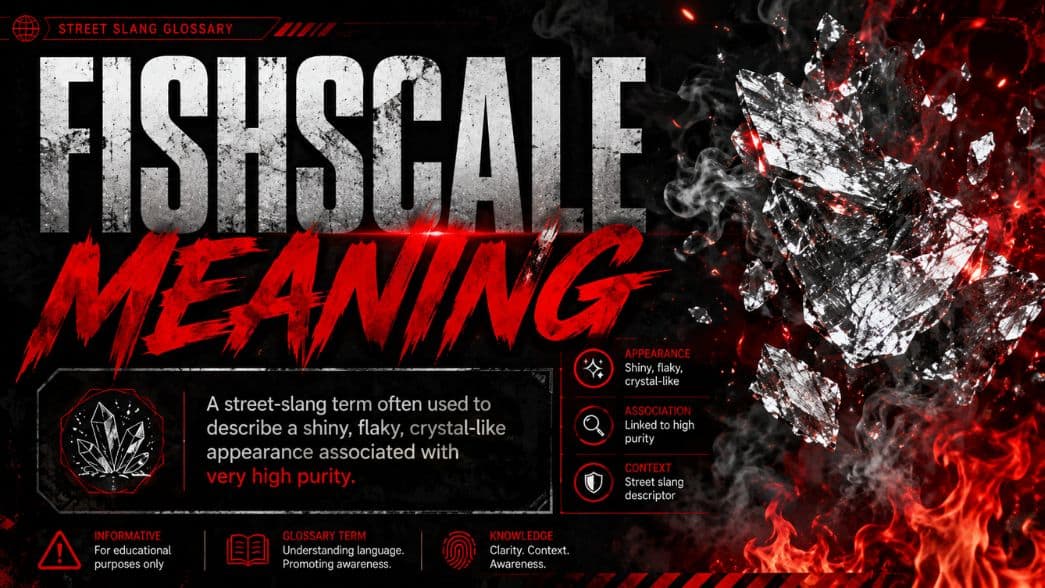
The term ‘fishscale’ isn’t just random slang. It comes from a very real visual characteristic of high-purity cocaine hydrochloride (HCl). When cocaine is produced and purified correctly, it forms a crystalline structure. Think of it like salt or sugar crystals, but on a much finer scale. When a brick of highly pure, well-pressed cocaine is broken apart, it flakes off in layers. These flakes catch the light in a way that creates a pearly, iridescent sheen, much like the scales of a fish. This is the ‘fishscale’ effect in its truest form.
Back in the 70s and 80s, when major trafficking routes were being established, large quantities of cocaine were moved in heavily compressed kilo bricks. The product at the top of the supply chain was often exceptionally pure. When these bricks were cracked open, the flaking and the resulting shimmer were considered the tell-tale sign of untouched, premium-grade blow. The legend was born from a genuine physical property. The problem is, what was once a sign of purity has now become a target for imitation. The term became a part of the lexicon of the drug trade, a quick and easy way to denote top-tier product. But as the market evolved and the supply chain became more fragmented, the term started to get diluted. Mid-level dealers, wanting to move their product, would use the term to upsell, regardless of the actual quality. This is where the line between a genuine descriptor and a marketing ploy began to blur.
The Chemistry of the Shine: What Visuals Actually Tell You
So, what’s the science behind that shimmer? It’s all about light reflection and crystal structure. Pure cocaine HCl forms flat, flaky crystals. When light hits these microscopic, layered surfaces, it scatters and reflects, creating the pearlescent effect. A dull, chalky, or powdery appearance often suggests the presence of cutting agents that disrupt this crystalline structure. Adulterants are typically just fine powders that get mixed in, effectively ‘diluting’ the crystals and dulling the natural shine.
However—and this is a big ‘however’—a shine doesn’t automatically equal purity. While high-purity cocaine should have a certain luster, savvy (and let’s be honest, shady) producers have figured out how to mimic this look. Certain cutting agents are chosen specifically because they have their own crystalline or shiny properties. One of the most notorious is levamisole.
Levamisole is a deworming agent for livestock, and for reasons that are still debated, it’s become an incredibly common cut in cocaine across the globe. Some studies have found it in up to 80% of cocaine seized. Not only does it add bulk, but it also has a ‘fish scale’ appearance when mixed with cocaine, making a lower-purity product look like it’s top-shelf. As noted by researchers at the National Institutes of Health, levamisole is a high-performance cutting agent that can be dangerous, causing severe side effects like skin lesions and immune system suppression. This is a perfect example of why you can’t judge a book by its cover, or a bag by its shine. The presence of levamisole is a serious health concern, and its use as a cutting agent is a stark reminder that visual inspection alone is not enough. The risks associated with levamisole are well-documented, with reports from health organizations like the World Health Organization detailing its potential to cause agranulocytosis, a life-threatening condition where the body’s white blood cell count drops to dangerously low levels.
Beyond the Look: The Acetone Wash
If you can’t trust your eyes, what can you do? For those who are serious about knowing what’s in their product, one of the oldest purification methods is the ‘acetone wash.’ This is a basic chemistry principle at work. Cocaine hydrochloride is insoluble in pure, anhydrous (water-free) acetone. However, many of the common cuts—like sugars, caffeine, and other stimulants—are soluble.
In theory, by dissolving your product in acetone, the impurities will dissolve into the liquid while the pure cocaine HCl settles at the bottom. You can then pour off the acetone (and the dissolved cuts with it) and be left with a cleaner product. While this sounds great, it’s not a foolproof method. It won’t remove levamisole, for instance, as it’s also largely insoluble in acetone. It’s a harm-reduction technique that can remove some junk, but it’s not a guarantee of 100% purity. It’s a step up from just trusting your eyes, but it’s not a replacement for sourcing from a supplier you trust. For those interested in the chemistry, the process relies on the principle of solubility. Cocaine HCl is a salt, and its solubility in different solvents can be exploited to separate it from impurities. An acetone wash is a simple form of this, but more complex methods like recrystallization can yield even purer results, though they require more knowledge and equipment. For more information on harm reduction practices, resources like DanceSafe provide valuable, non-judgmental information. We also have a great article on The Importance of Purity Testing that goes into more detail on this topic.
Marketing Hype vs. Real Quality Indicators
So, we’ve established that the term ‘fishscale’ is now used more for marketing than for accurate description. Any dealer can call their product ‘fishscale’ to justify a higher price tag. So what should you actually look for?
- Consistency: Good quality cocaine should be slightly oily or sticky when pressed between your fingers, not dry and chalky. It should break down with a bit of pressure.
- Smell: It should have a distinct, slightly sweet, and chemical smell. A very strong gasoline or solvent smell can be a sign of improper processing.
- The Numb: While the numbing effect (from cocaine’s anesthetic properties) is expected, an immediate and overpowering numbness can be a red flag. Lidocaine or benzocaine are common cuts used to mimic this effect, and they often numb more intensely and quickly than cocaine itself.
- Source: This is the big one. The most reliable way to ensure quality is to know your source. A trusted supplier who values their reputation is worth more than any visual inspection. That’s why we at Hell Ya pride ourselves on consistency and transparency. You know what you’re getting. Check out our Cocaine selection for products that speak for themselves. We also have a range of other premium products, including MDMA and Ketamine, all sourced with the same commitment to quality and transparency.
Ultimately, the term ‘fishscale’ is a relic from a different time. While it’s rooted in a real phenomenon, it’s been co-opted by marketers. True quality is a combination of factors, and the most important one is trust in your supplier. Don’t fall for the shiny hype; be an educated consumer.
Frequently Asked Questions (FAQ)
1. What’s the main difference between ‘fishscale’ and ‘regular’ cocaine?
Historically, ‘fishscale’ referred to very high-purity cocaine (often 90%+) that had a pearlescent, scaly appearance when broken off a brick. ‘Regular’ street cocaine is typically lower purity (around 60-70%) and has more cutting agents, giving it a more powdery or chalky look. Today, however, the term is often just marketing, and visual appearance alone is not a reliable indicator of purity.
2. If my cocaine is shiny, does that mean it’s pure?
Not necessarily. While pure cocaine does have a natural sheen due to its crystalline structure, some common cutting agents like levamisole are added specifically to mimic this shiny appearance. This makes lower-quality cocaine look like it’s high-grade. Relying only on shine is a common mistake.
3. Is fishscale cocaine safer to use?
No, in fact, it can be more dangerous for inexperienced users. Because of its higher potency, the risk of overdose is significantly greater. A person used to taking lines of 60% pure cocaine could easily overdose by taking the same amount of a 90% pure product. Always start with a small test amount when trying a new batch, regardless of what it’s called.
4. How can I test my cocaine for purity and cuts?
While a full lab analysis is the only way to know for sure, there are at-home options. Reagent test kits can help identify the presence of cocaine and rule out some common, dangerous substitutes. Some kits can also detect specific adulterants like fentanyl or levamisole. An acetone wash can also be used to remove some, but not all, impurities.
About the Author:
Hell Ya Jason is a veteran in the Canadian recreational scene. With a background that blends street smarts with a deep understanding of the chemistry behind the products, he’s dedicated to providing customers with the knowledge and quality they deserve. He believes an educated customer is a happy customer, and his mission is to cut through the hype and deliver the facts. When he’s not curating Canada’s finest selection, he’s sharing his insights on how to navigate the world of premium recreational goods safely and effectively.