
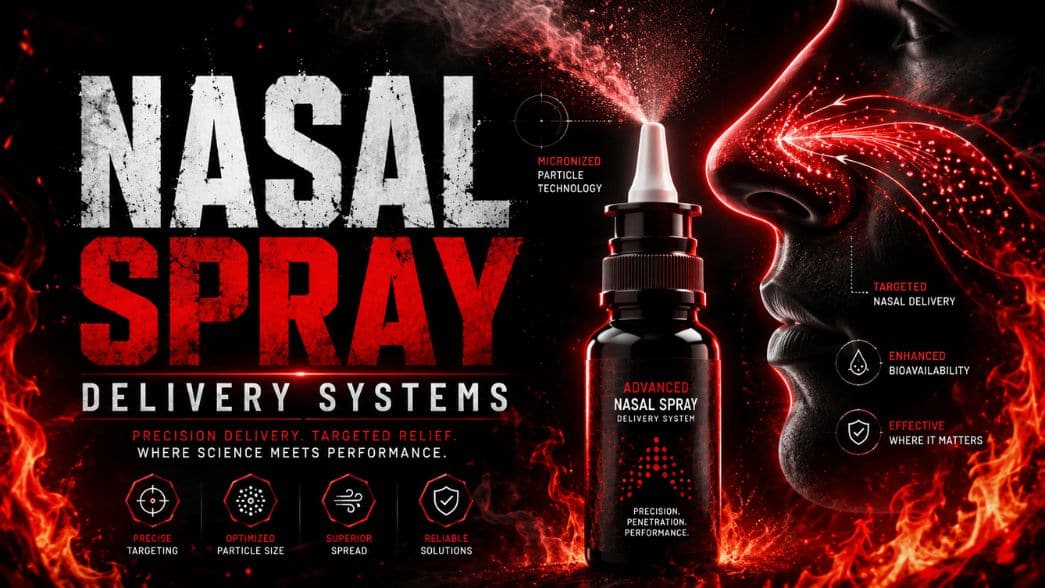
Nasal Spray Delivery Systems: Why Bioavailability Matters More Than Dose Size
It’s a question that comes up more often than you’d think: how can a little spritz up the nose pack such a punch, sometimes more than a larger amount of powder? It seems counterintuitive, right? More should equal more. But when it comes to how your body processes certain things, the delivery route is king. And in the world of recreational products, the nasal spray is quickly becoming the king of delivery routes. Forget what you think you know about dosing; we’re here to talk about something far more important: bioavailability.
This isn’t just about getting a product into your system. It’s about how much of that product actually reaches the parts of your body where it can do its thing. Think of it like this: you can have the most expensive, high-quality ingredients in the world, but if your body can’t absorb them, they’re just going to waste. That’s where nasal spray delivery systems come in, and why they’re a game-changer for anyone who values efficiency and consistency.
The Express Lane to Your Brain: Understanding Nasal Absorption
So, what’s so special about the inside of your nose? It’s not just a passage for air. Your nasal cavity is lined with a thin layer of tissue called the nasal mucosa, and this tissue is a gateway to your bloodstream. It’s packed with a dense network of blood vessels, which means that anything absorbed through it gets a direct, fast-track ticket to your circulatory system. [1]
This is a huge advantage over other methods, like oral ingestion. When you swallow something, it has to go through your digestive system and then to your liver before it enters your bloodstream. This is called the “first-pass effect,” and it can significantly reduce the amount of active ingredient that actually makes it into your system. Your liver is a powerful filter, and it can break down a lot of a substance before it has a chance to work. Nasal delivery, on the other hand, bypasses the liver entirely. It’s a more direct route, which means more of the good stuff gets where it needs to go.
Bioavailability: It’s Not How Much You Take, It’s How Much You Get
This brings us to the core concept: bioavailability. In simple terms, bioavailability is the percentage of a drug or other substance that is absorbed into your bloodstream and is available to have an active effect. With oral ingestion, bioavailability can be as low as 10-20% for some substances. With nasal delivery, it can be as high as 80% or more. [2]
Let’s break that down a bit more. When you take a substance orally, it has to survive the harsh environment of your stomach, get absorbed through the intestinal wall, and then pass through the liver. At each of these steps, a portion of the substance is lost. The stomach acid can destroy some of it, the intestinal wall may not be very permeable to it, and the liver is designed to metabolize and eliminate foreign substances. This is why you might need to take a much larger dose of something orally to get the desired effect.
Nasal delivery, on the other hand, is like a VIP pass to your bloodstream. The nasal mucosa is thin and highly vascularized, meaning it has a lot of blood vessels. This allows for rapid and direct absorption into the circulatory system. There’s no stomach acid to contend with, no intestinal wall to cross, and no first-pass metabolism in the liver. It’s a much more efficient and direct route, which is why it’s becoming increasingly popular for a wide range of substances, from medications to recreational products.
This is why a smaller dose in a nasal spray can feel more potent than a larger dose taken orally. It’s not that the product is stronger; it’s that your body is able to use it more efficiently. You’re getting more bang for your buck, so to speak. This is a crucial point to understand, especially if you’re used to thinking in terms of milligrams or grams. With nasal sprays, the dose size on the label doesn’t tell the whole story. The bioavailability is the real measure of a product’s potency.
Sprays vs. Powders: A Tale of Two Noses
For a long time, powder insufflation (snorting) was the go-to method for nasal delivery. But it’s a crude and inefficient way to get the job done. When you snort a powder, a lot of it can end up in your throat or your lungs, where it’s not going to be absorbed properly. The particle size is often inconsistent, and it’s difficult to get an even coating on the nasal mucosa.
Think about it: when you snort a powder, you’re relying on the force of your own inhalation to get the substance into your nasal cavity. This can lead to a lot of variability. If you sniff too hard, the powder can go straight to the back of your throat and down into your stomach. If you don’t sniff hard enough, it might not go far enough into your nasal cavity to be absorbed effectively. It’s a bit of a guessing game, and the results can be unpredictable.
Furthermore, the particle size of a powder can have a huge impact on its absorption. If the particles are too large, they won’t be able to pass through the nasal mucosa. If they’re too small, they can be easily inhaled into the lungs, where they can cause irritation and may not be absorbed at all. It’s a delicate balance, and it’s one that’s difficult to achieve with a simple powder.
Nasal sprays, on the other hand, are designed for precision. The particle size is carefully controlled to ensure optimal absorption, and the spray mechanism is designed to deliver a fine mist that coats the entire nasal cavity. This means you’re getting a much more consistent and reliable dose every time. Plus, it’s a lot more discreet and a lot less messy. If you’re looking for a reliable and effective product, check out our nasal spray products.
The beauty of a nasal spray is that it takes the guesswork out of the equation. The device is calibrated to deliver a precise dose with each spray, so you know exactly how much you’re getting. The particle size is optimized for absorption through the nasal mucosa, and the spray pattern is designed to cover the largest possible surface area. This all adds up to a more efficient, more effective, and more predictable experience.
And let’s not forget the convenience factor. A nasal spray is small, portable, and easy to use. There’s no need for mirrors, straws, or other paraphernalia. You can use it quickly and discreetly, wherever you are. It’s the modern, sophisticated way to enjoy your favorite recreational products.
The X-Factors: What Affects Nasal Absorption?
Even with the most advanced nasal spray, there are still a few factors that can affect how well a substance is absorbed. These include:
- Congestion: If your nose is blocked, it’s going to be harder for the spray to reach the nasal mucosa. It’s always a good idea to blow your nose before using a nasal spray.
- Technique: The angle of the spray and how you inhale can make a big difference. You want to aim the nozzle towards the back of your nose, not up. And you want to sniff gently, not snort.
- Formulation: The ingredients in the spray can also affect absorption. Some sprays contain “penetration enhancers” that help the active ingredient pass through the nasal mucosa. [3]
Getting the Most Out of Your Spritz: A Quick Guide
To maximize the bioavailability of your nasal spray, follow these simple steps:
- Clear your nose: Gently blow your nose to clear out any mucus or debris.
- Shake the bottle: This will ensure that the ingredients are evenly mixed.
- Aim for the back: Tilt your head forward slightly and insert the nozzle into one nostril. Aim the nozzle towards the back of your nose, away from the septum (the wall between your nostrils).
- Spray and sniff: Squeeze the pump and sniff gently at the same time. Don’t snort or inhale too deeply.
- Repeat on the other side: If the directions say to use more than one spray, repeat the process in the other nostril.
Frequently Asked Questions
Q: Is nasal spray delivery safe?
A: When used as directed, nasal sprays are a safe and effective way to deliver a wide range of substances. However, it’s important to choose a reputable brand and to follow the instructions carefully.
Q: Can I become tolerant to nasal sprays?
A: As with any substance, it is possible to develop a tolerance to the active ingredient in a nasal spray. It’s important to use these products responsibly and to take breaks as needed.
Q: Are there any side effects?
A: Some people may experience mild side effects, such as a runny nose or a sore throat. These side effects are usually temporary and go away on their own.
Q: Where can I find high-quality nasal sprays?
A: For a curated selection of premium nasal spray products, visit our nasal spray category.
The Takeaway
When it comes to getting the most out of your recreational products, it’s not just about what you take; it’s about how you take it. Nasal spray delivery systems offer a powerful combination of high bioavailability, rapid onset, and consistent dosing that is simply unmatched by other methods. So next time you’re comparing products, don’t just look at the dose size. Look at the delivery method. Your body will thank you for it.
Author Bio
The Hell Ya Team is a collective of cannabis connoisseurs and product experts dedicated to bringing you the best of the Canadian recreational market. With a deep understanding of the science behind the high, we’re here to help you make informed choices and to elevate your experience.
References
[1] Nasal drug delivery: the non-invasive future of treatment | Article | Drug Target Review
[2] Different Methods and Formulations of Drugs and Vaccines for Nasal Administration – PMC
[3] A Guide to Nasal Drug Delivery: Formulations and Devices